Photos by the author
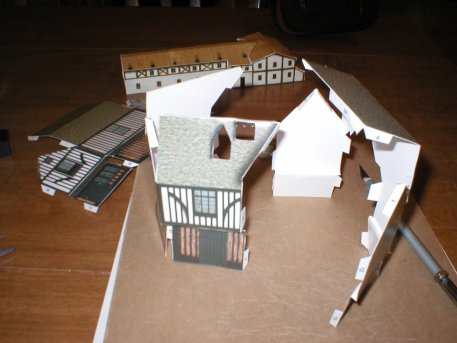
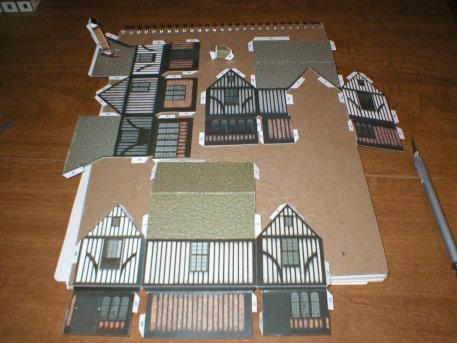
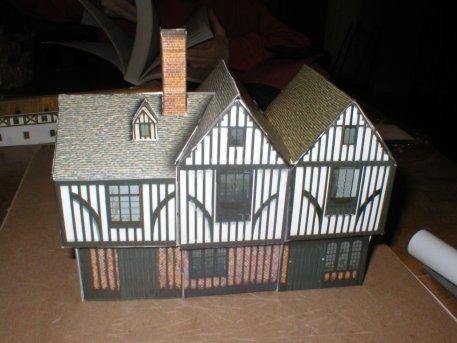
From the Iron age to the Georgian Era. When I first looked these models over I thought "Piece of cake!" In reality these models are not as simple as they first looked. Each model only has a few parts, but they are large and can be complex in finished shape. I started with the Georgian Town House. The designer uses a tab system that I had not run across before. The tabs interlock and help to align each piece. Because of this, if the tabs are not trimmed correctly or were actually printed in the wrong place, the pieces miss align, this of course can be taken care of by carefully pre-testing each fit and trimming where necessary.


One of the few things I disliked about these models were size of the pieces. Rather than make an large
assembly out of several smaller pieces, the designer made the assemblies very large, using fewer parts,
but these parts then required intricate cutting, scoring and folding, which became awkward when working
on such a large piece. This made me wonder who the models are designed for. Originally I thought this
series of models is designed for Students who need a display for a historical report. These models are
excellent sources of information and include useful internet links and short historical summaries, as well
as places where you can go see the real things. But the actual assembly seemed a little more difficult then
I would expect a first time modeler to be able to do. For the most part each model went together easily,
but each model had at least one section that was designed much more complexly then it needed to be.
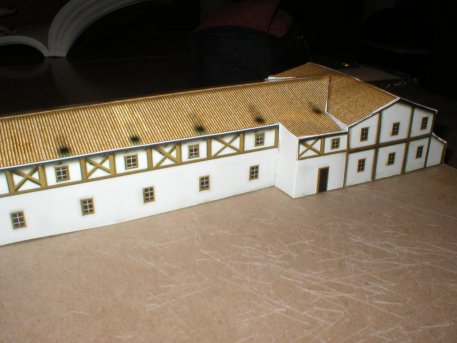
The artwork on these models is fantastic. It is photo-realistic down to the bricks and mortar. They are
printed on glossy stock. When I first saw how glossy I wasn't sure how it would look on the finished model.
In reality it looks really good. The level of detail is incredible right down to the buildings on the opposite
side of the street reflecting back in some of the windows. The greenery climbing up a brick wall would
allow the model to slip right into a diorama with trees. Each model also comes with some small figures
you can cut out and prop up. Unfortunately compared to the detail on the buildings, the figures almost
look ghostlike in their lack of color and detail. If you used them they would detract from the model.


The instructions while brief include a detailed diagram, which makes it easy to understand what parts
go where. Every model has a picture on the front of what the finished model should look like, Unfortunately,
(and this is a pet peeve,) it is not an actual picture of the model, but rather a representation of it. Certain
differences between the illustrations and the models stand out, most notably the chimneys in the illustrations
are detailed and finely shaped. On the actual models they are rectangular boxes. Not a big difference, but
It stands out in a comparison of the model and the Illustration.
I liked these models, I wouldn't recommend them as a first model, even the most simple of them. But for
someone who as done one or two models before, these are great and actually will help stretch your skills
a bit.
Summary:
| Model: | Britain Through the Ages |
| Iron Age Round House | |
| Roman Town House | |
| Civil War Town House | |
| Georgian Town House | |
| Publisher: | Card Models.CO.UK |
| Designer: | Scout Design Ltd. |
| Scale: | various |
| Difficulty: | Easy |
| Number of Parts: | 5 to 8 pieces per kit |
| Instructions: | English instructions with diagrams |
| Diagrams: | Excellent |
| Coloring and Artwork: | Excellent, very glossy. |
| Availability: | www.cardmodels.co.uk |
